Anyone looking for a Unitree humanoid comparison has usually already decided they want a robot they can order, with a price list in euros. The question is which one. Abra Robotics lists five families: G1, R1, H2, G1-D and R1-D. The specifications come from the official Unitree pages, the prices from our end-user price list.
Specifications compared
Values declared by the manufacturer for the base configuration. Arm payload varies a lot with arm posture, so read it as an order of magnitude.
| Model | Height | Weight with battery | Degrees of freedom | Battery life | Payload per arm |
|---|---|---|---|---|---|
| R1 | 1230 mm | ~27–29 kg | 20 (Air), 26 (R1), 26–40 (EDU) | ~1 h | ~2 kg |
| G1 | 1320 mm | ~35 kg | 23 (base), 23–43 (EDU) | ~2 h | ~2 kg (base), ~3 kg (EDU) |
| H2 | 1820 mm | ~70 kg | 31 | ~3 h | ~7 kg nominal, ~15 kg peak |
| G1-D | 1260–1680 mm (column) | ~90 kg | 17 (Standard), 19 (mobile version), excluding end-effectors | ~2 h (Standard), ~6 h (mobile) | ~3 kg |
| R1-D | 700 mm to 1600 mm depending on version | ~11–32 kg | 15–22 with gripper | ~1.5 h | 2–4 kg |
Sources: product pages on unitree.com, listed at the end of the article.
Prices (excluding VAT)
| Model | Entry version | Development version |
|---|---|---|
| R1 | R1 Basic €8,262, R1 Air €7,190 | R1 Edu Standard (U1) from €14,930, R1 Edu Smart (U2) from €17,608 |
| G1 | G1 Air €19,809 | G1-U1 from €38,005, G1-U2 from €46,809 |
| H2 | H2 Air €43,874 | H2 EDU €68,085 |
| G1-D | Standard (fixed column) from €38,005 | Flagship (mobile base) from €51,944 |
| R1-D | R1-A5 Standard (torso on a fixed base) from €6,295; R1-A5-D Standard (on a mobile frame) from €12,164 | |
Prices are in euros, excluding VAT; shipping and insurance are quoted in the offer. The full list of configurations is in the Unitree price list.
G1: the most widely used research platform
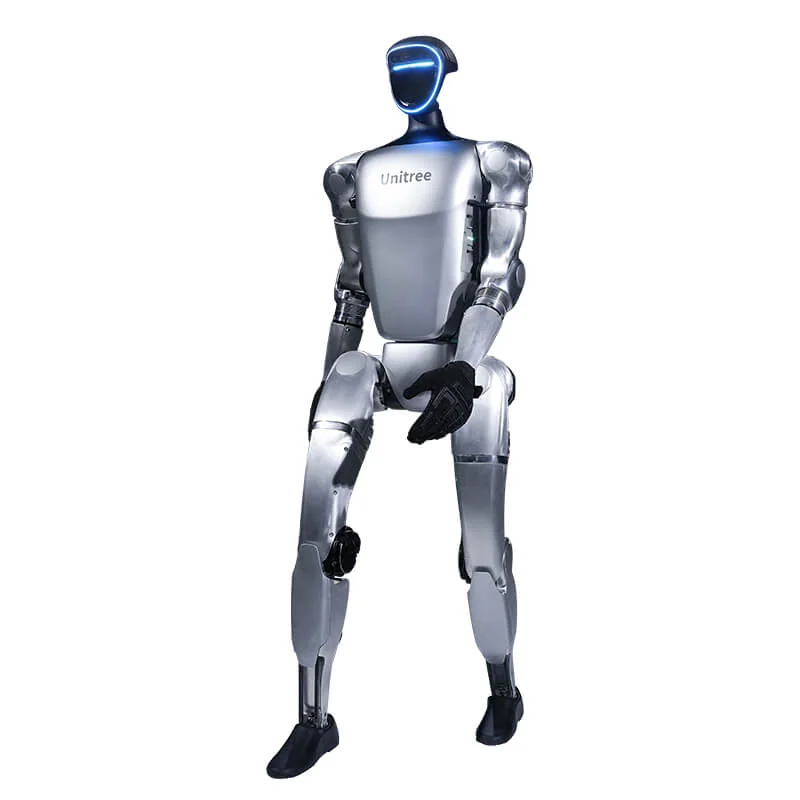
The G1 takes a 9000 mAh quick-release battery. The base version has 23 degrees of freedom (6 per leg, 5 per arm). The EDU versions go up to 43 degrees of freedom with the three-fingered Dex3-1 hands and optional wrists, raise the maximum knee torque from 90 to 120 N·m and accept an NVIDIA Jetson Orin compute module.
The point not to miss: programming with the SDK (joint access, ROS 2) is only available on the EDU versions. If the robot is for theses, papers or software integration, start from the G1-U1 upwards. To make sense of the U1–U10 codes there is the guide on which version of the G1 to choose; for software, programming the G1.
R1: the lowest budget
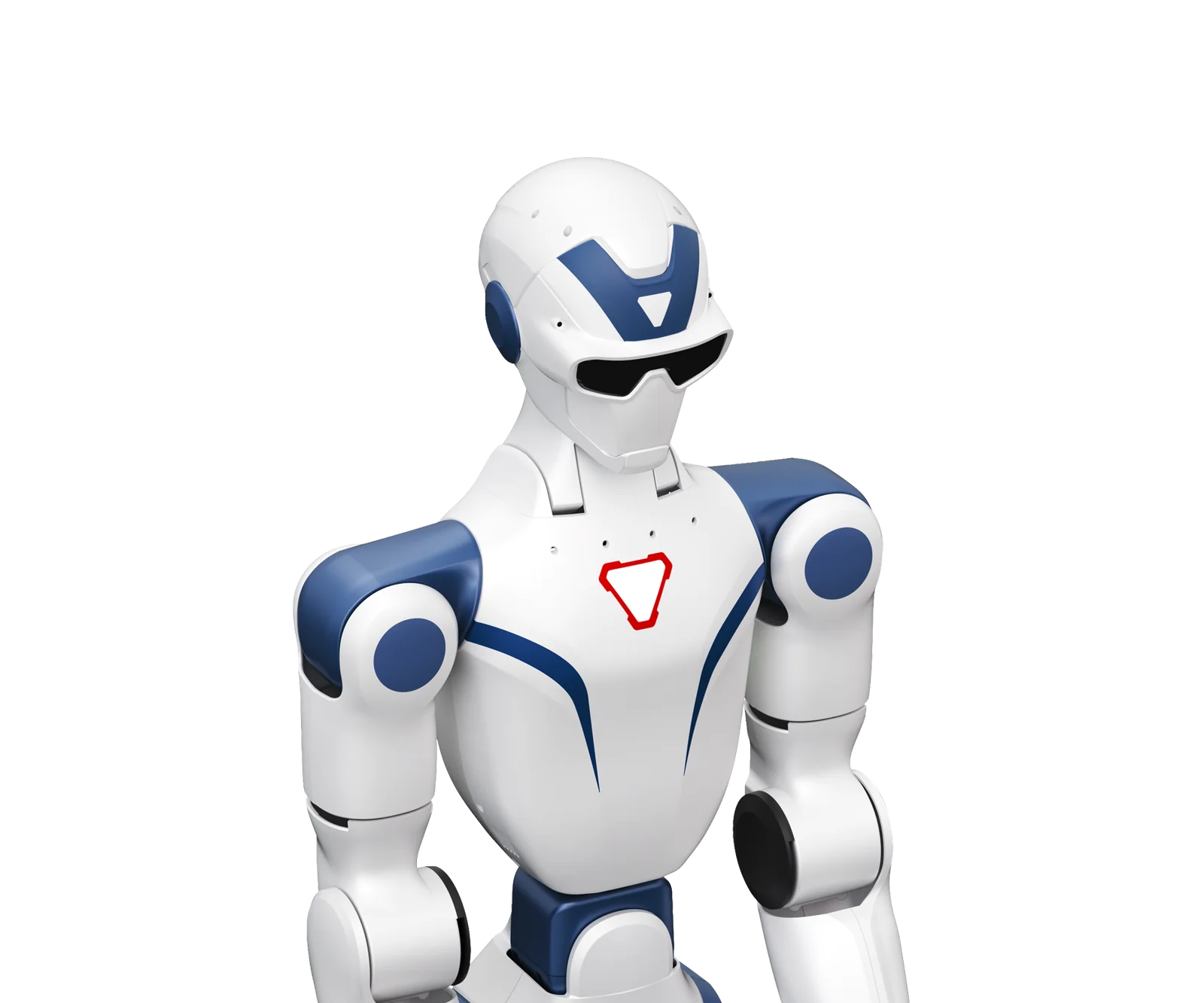
Unitree sells the R1 in three tiers: Air (20 degrees of freedom, monocular camera), R1 (26 degrees of freedom, binocular camera, motorised waist and head) and EDU (26–40 degrees of freedom, optional hands and Orin module). Battery life is the same for all versions.
Here too the SDK comes only with the EDU, so for a lab the realistic price starts at €14,930 (R1 Edu Standard, R1-U1), not the €7,190 of the R1 Air. It is still the cheapest biped humanoid on the price list and suits courses, teaching and first reinforcement-learning experiments.
H2: when you need the adult size
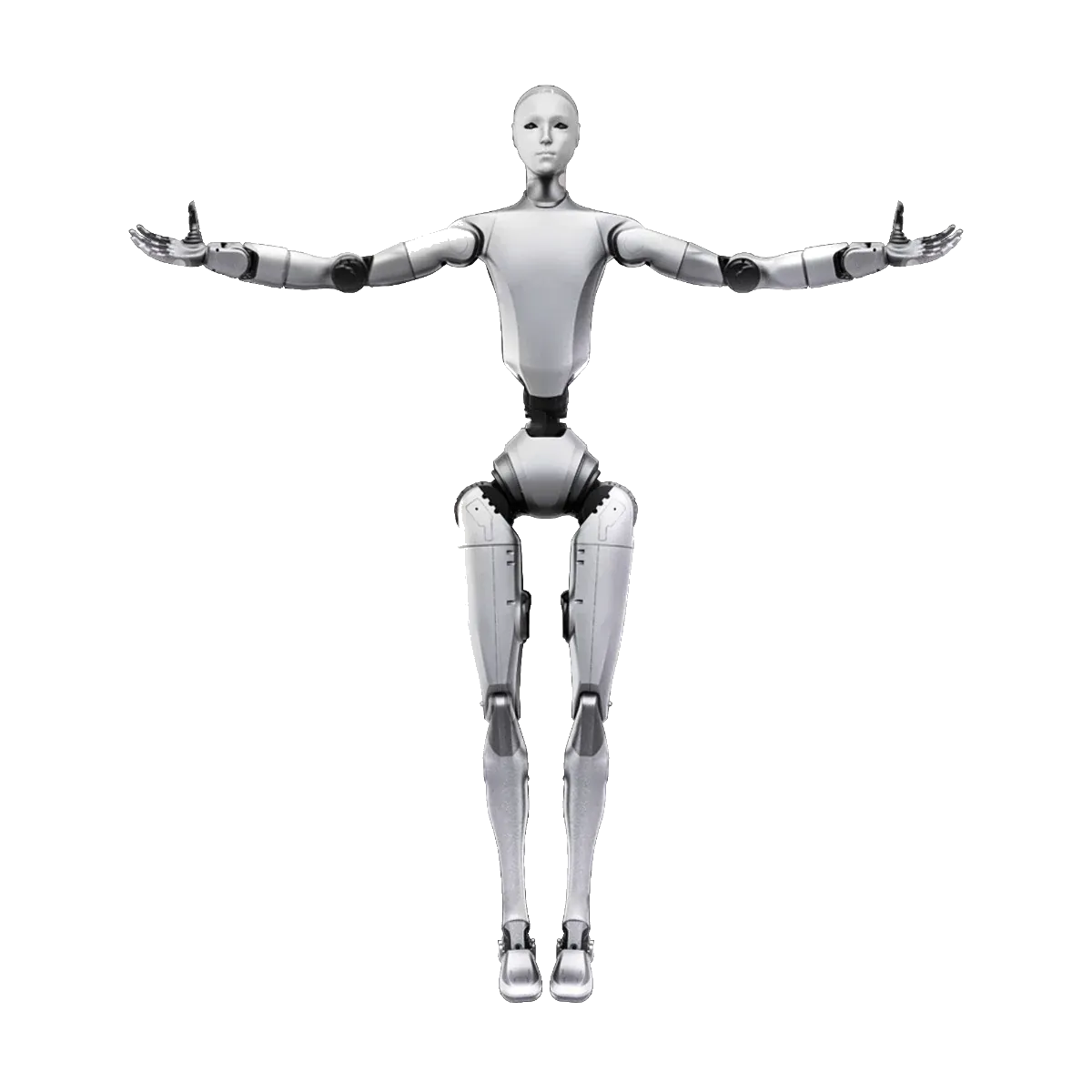
The H2's 31 degrees of freedom break down as 6 per leg, 7 per arm, 3 at the waist and 2 at the head. Maximum torque reaches 360 N·m on the legs and 120 N·m on the arms. The battery is rated at 15 Ah (0.972 kWh).
It needs space, a test area suited to its weight and a use case that really calls for human scale (interaction with people, workstations designed for an adult). The SDK comes with the H2 EDU. Further reading: Unitree H2 in the UK.
G1-D and R1-D: torsos for manipulation
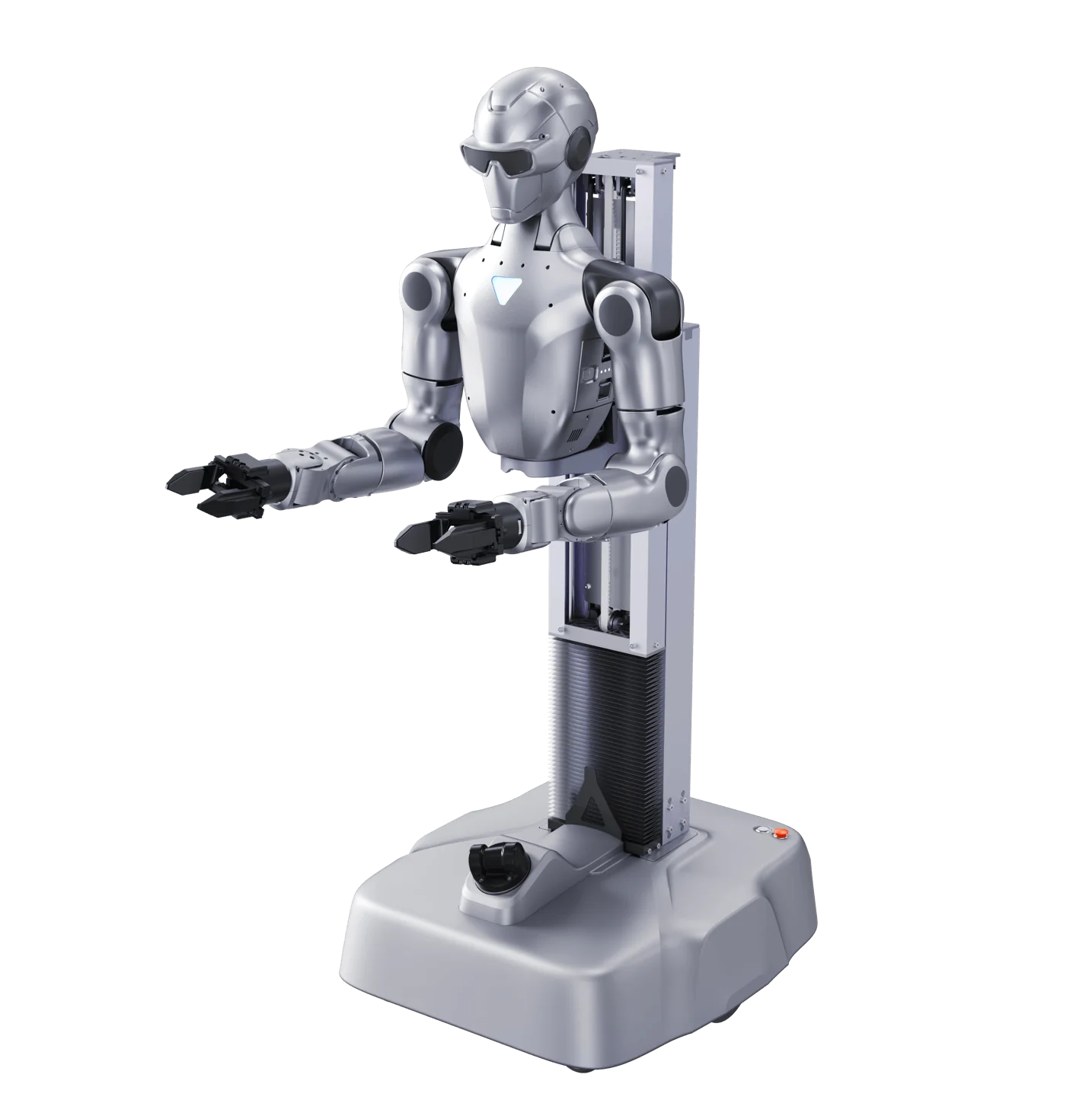
The G1-D has two 7-degree-of-freedom arms, a 2-degree-of-freedom waist and a column that adjusts its height. The Standard version sits on a fixed stand; the mobile one has a differential base that reaches 1.5 m/s and carries a LiDAR. On its own page Unitree calls the mobile version "Ultimate"; in our price list it is the Flagship. It weighs about 90 kg, so it is not a robot you move by hand.
The R1-D (Unitree presents it as the Dual-Arm Humanoid Robot, models R1-A5, R1-A7, R1-A5-D and R1-A7-D) has 5- or 7-degree-of-freedom arms. The R1-A5 and R1-A7 run on external power; the versions with the D suffix add a mobile frame and go from 683 to 1600 mm in height.
With no legs there is no risk of falling over through loss of balance, and the robot behaves more like a manipulation cell. It is the sensible choice when the task is picking and placing objects on a bench, not crossing a shop floor.
How to choose: five questions
- Does it need to walk, or is manipulation enough? If manipulation is enough, G1-D or R1-D.
- Do you need to program it? If so, you need the EDU versions with the SDK, which cost more than the entry versions.
- Which hands do you need? Two-fingered gripper, three-fingered Dex3-1 (with or without tactile sensors) or five-fingered hands: they change price and degrees of freedom.
- How long must it run without recharging? Declared battery life ranges from about 1 to about 6 hours (see the table above). For a full day of testing with a biped you almost always need a spare battery.
- Where will it work? A classroom, a laboratory or a production area have different safety constraints (see Machinery Regulation 2027).
Simplified decision tree
- Budget under €20,000 and educational use: R1, EDU version if you need to program it.
- Research on locomotion, embodied AI, datasets: G1 EDU.
- Hands with tactile sensors: G1-U4 (tactile Dex3-1) or G1-U8 (Revo 2 Touch).
- Pick and place on a bench or data collection for teleoperation: G1-D or R1-D.
- Human-scale interaction: H2.
- Repetitive high-cadence task: a cobot, not a humanoid (why).
If the use case is still unclear, the assessment helps you work it out before ordering. To set up a trial in your company there is the guide to a PoC with a humanoid.