"Can I replace the cobot on the line with a G1?" Almost always the answer is no. The humanoid works, but it solves a different problem. This guide compares the two families using the specifications declared by the manufacturers, the public list prices and the current state of the safety standards, to help you decide where to start.
What we mean by traditional robotics
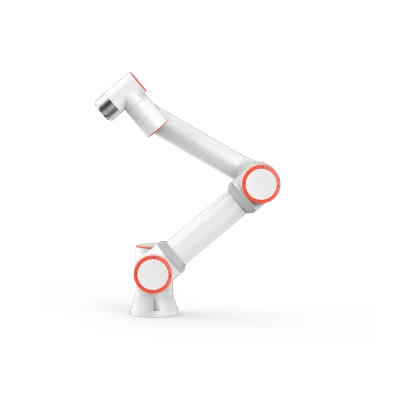
- Cobots: collaborative arms for screwdriving, pick and place, machine tending and palletising. Example: the Fairino FR3, 6 axes, 3 kg nominal payload, 622 mm reach, ±0.02 mm repeatability according to ISO 9283 (manufacturer datasheet). Full range on the cobots page.
- AMRs: autonomous mobile robots for transporting carts, racks and pallets on indoor routes. At list price, the range starts with the AutoXing Juno Plus. Overview on the AMR page.
- Quadrupeds: inspection, surveillance and sensor transport in unstructured environments, with models such as Go2, AS2 and B2.
What they have in common: defined cycles, established reference standards and KPI that are easy to measure, such as parts per hour, OEE and cycle time.
What a humanoid brings today (and what it doesn't)
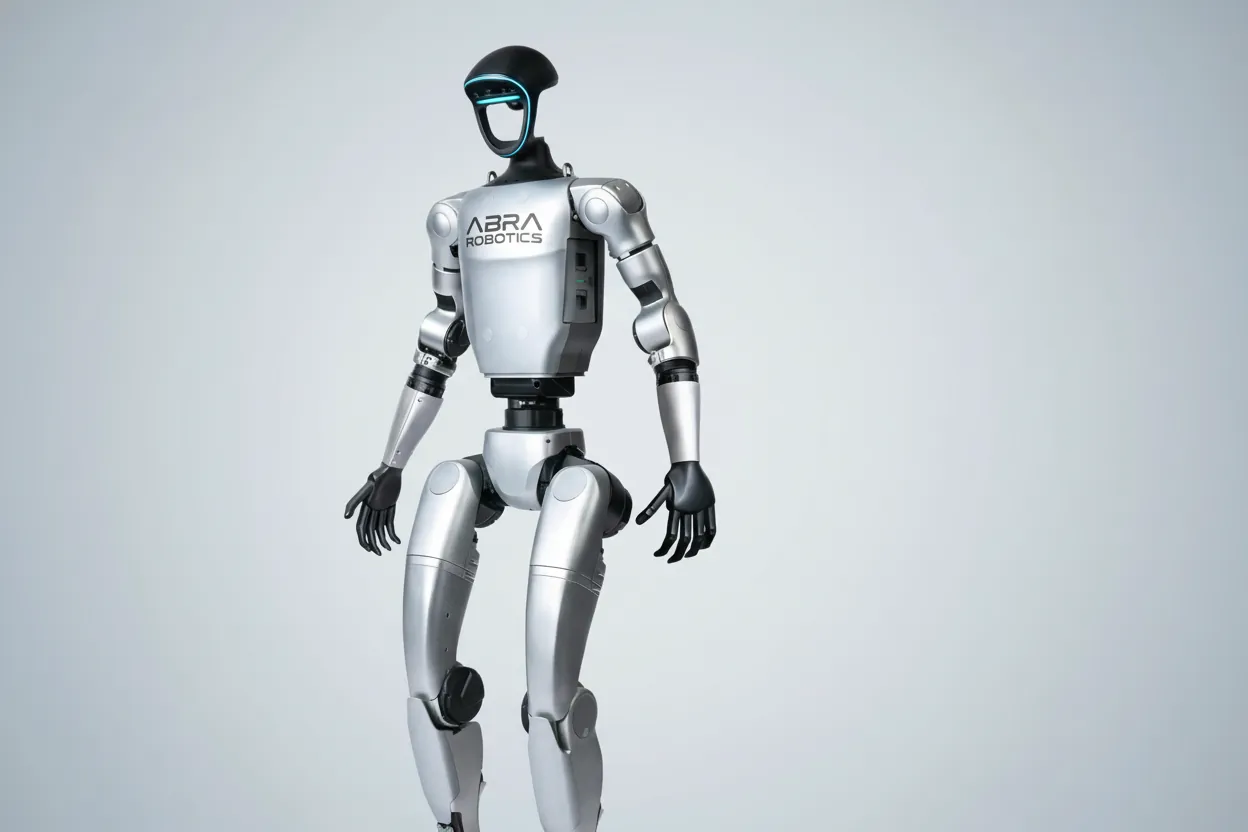
A biped such as the G1 or the H2 moves through spaces designed for people, can switch tasks within the same day and is the platform on which research on embodied AI, teleoperation and imitation learning is done today. The official G1 specifications help to understand the limits:
| Specification (unitree.com) | G1 | G1 EDU |
|---|---|---|
| Standing height | 1320 mm | 1320 mm |
| Weight with battery | about 35 kg | about 35 kg and above |
| Degrees of freedom | 23 | 23 to 43 |
| Max arm payload | about 2 kg | about 3 kg |
| Battery | 9000 mAh, about 2 h | 9000 mAh, about 2 h |
| Max knee torque | 90 N·m | 120 N·m |
Unitree notes that the arm payload varies greatly with the extension posture and does not declare a repeatability value. Realistic uses today:
- university laboratories and research projects;
- PoC in a fenced area: light kitting, data collection, teleoperation;
- technology demonstrators and internal training.
It more rarely makes sense to replace an already efficient cell with a humanoid.
Direct comparison (indicative values)
| Cobot / AMR | Bipedal humanoid | |
|---|---|---|
| Precision | FR3: ±0.02 mm declared (ISO 9283) | G1: not declared by the manufacturer |
| Payload | FR3: 3 kg nominal; AMR: from tens to hundreds of kg depending on the model | G1: about 2 kg, EDU about 3 kg per arm |
| Runtime | Cobot powered from the mains; AMR depending on the model, recharging at a station | G1: about 2 h per battery |
| Reference standards | ISO 10218-1/2:2025, including collaborative applications | Specific standard under development (ISO 25785-1) |
| List price (excl. VAT) | FR3 from €5,766; AMR from €20,399 | G1 Air from €19,809; G1 EDU (U1) from €38,005; H2 Air from €43,874 |
| Typical KPI | Cycle time, OEE, parts per hour | Task success rate, data collected, flexibility |
Prices are updated on the Unitree price list and on the product pages. On top of the humanoid's price you should add software development, an equipped test area and training: these often weigh as much as the hardware.
Safety and standards
General information, not legal advice.
The ISO 10218-1:2025 and ISO 10218-2:2025, published in February 2025, replace the 2011 editions and cover industrial robots, applications and cells. Part 1 now incorporates the requirements for collaborative applications that were previously in the ISO/TS 15066 technical specification.
A biped adds one more problem: it stays upright only thanks to active balance control. If it loses power or is brought to a stop it can fall, whereas an AMR or a cobot simply stops where it is. For this category (industrial mobile robots with actively controlled stability, bipeds and quadrupeds) the ISO is working on ISO 25785-1, not yet published.
From 20 January 2027 the Machinery Regulation (EU) 2023/1230 applies, replacing the Machinery Directive 2006/42/EC. What it means for Unitree robots: Machinery Regulation 2027. In practice, the first tests with a humanoid are carried out in a fenced area, with a fall-prevention system (harness or overhead crane) and operators trained on the stop procedures.
When to stick with traditional robotics
- High-volume tasks with a short cycle.
- You need a machine with CE marking and quick commissioning.
- The environment is already structured: conveyors, bays, defined routes.
- The investment must pay back with measurable savings in the short term.
When to consider a humanoid
- Tasks not yet formalised, or many different low-volume tasks.
- R&D project, university, research grant.
- An environment designed for people, hard to adapt with conveyors or AMRs.
- A budget dedicated to innovation and data collection, not to the direct replacement of labour.
There is also a middle ground: the G1-D is a legless dual-arm torso, on a fixed base (G1-D Standard, from €38,005) or on a mobile base (G1-D Flagship, from €51,944). It removes the risk of the biped falling and stays closer to a manipulation cell. To choose between models: which Unitree humanoid to choose.
The path we usually recommend
- First: automate the bottleneck with a cobot or AMR, where the return is easier to measure.
- Then: a humanoid PoC on a complementary task (inspection, replenishment, data collection), with KPI written down before you start.
- Scale-up: only if the PoC KPI hold up (success rate, cycle time, total cost).
For a company purchase, cobots, AMRs and humanoids may qualify for several UK schemes that reduce the net cost, from capital allowances to R&D tax relief: the details are on the UK incentives page. If you are not sure where to start, the free assessment is there for exactly this: Abra Robotics supplies the Unitree range also in the United Kingdom and Ireland, with support in English, but it also sells cobots and AMRs, so there is no reason to push a humanoid where it is not needed.
Frequently asked questions
Can I replace a cobot on the line with a G1 humanoid?
It almost never pays off. A cobot such as the Fairino FR3 declares a repeatability of ±0.02 mm and runs on mains power; the G1 has a declared runtime of about 2 hours and a payload of about 2-3 kg per arm, while Unitree does not declare a repeatability value. The humanoid makes sense on different tasks, not as a replacement for an already efficient cell.
How much does a humanoid cost compared with a cobot?
At the Abra Robotics list price, excl. VAT: Fairino FR3 cobot from €5,766, AutoXing Juno Plus AMR from €20,399, Unitree G1 Air from €19,809, G1 EDU (U1) from €38,005, H2 Air from €43,874. On top of the humanoid's price you should add software development, a test area and training.
Is there a dedicated safety standard for humanoids?
Not yet published. ISO 10218-1 and 10218-2 of 2025 cover industrial robots and cells, including collaborative applications. For mobile robots that stay balanced through active control, such as bipeds and quadrupeds, the ISO is developing ISO 25785-1. From 20 January 2027 the EU Machinery Regulation 2023/1230 applies.
When does a humanoid make sense in a company?
When the value lies in flexibility or research: tasks not yet formalised, data collection to train models, environments designed for people that are hard to adapt, R&D projects with a dedicated budget. If the task is repetitive and high-volume, a cobot or an AMR remains the more predictable choice.
Is there a middle ground between a cobot and a humanoid?
Yes: the G1-D is a legless dual-arm Unitree torso, on a fixed base (Standard, from €38,005) or on a mobile base (Flagship, from €51,944). It removes the risk of the biped falling and stays closer to a manipulation cell.
Sources
- Unitree, official G1 page (G1 and G1 EDU specifications)
- FAIRINO, FR3 page (payload, reach, ISO 9283 repeatability)
- ISO, ISO 10218-1:2025, Robotics - Safety requirements - Part 1: Industrial robots
- ISO, ISO 10218-2:2025, Part 2: Industrial robot applications and robot cells
- ISO, ISO 25785-1 (draft under development)
- EUR-Lex, Machinery Regulation (EU) 2023/1230
- EUR-Lex, Machinery Regulation summary (application date 20 January 2027)