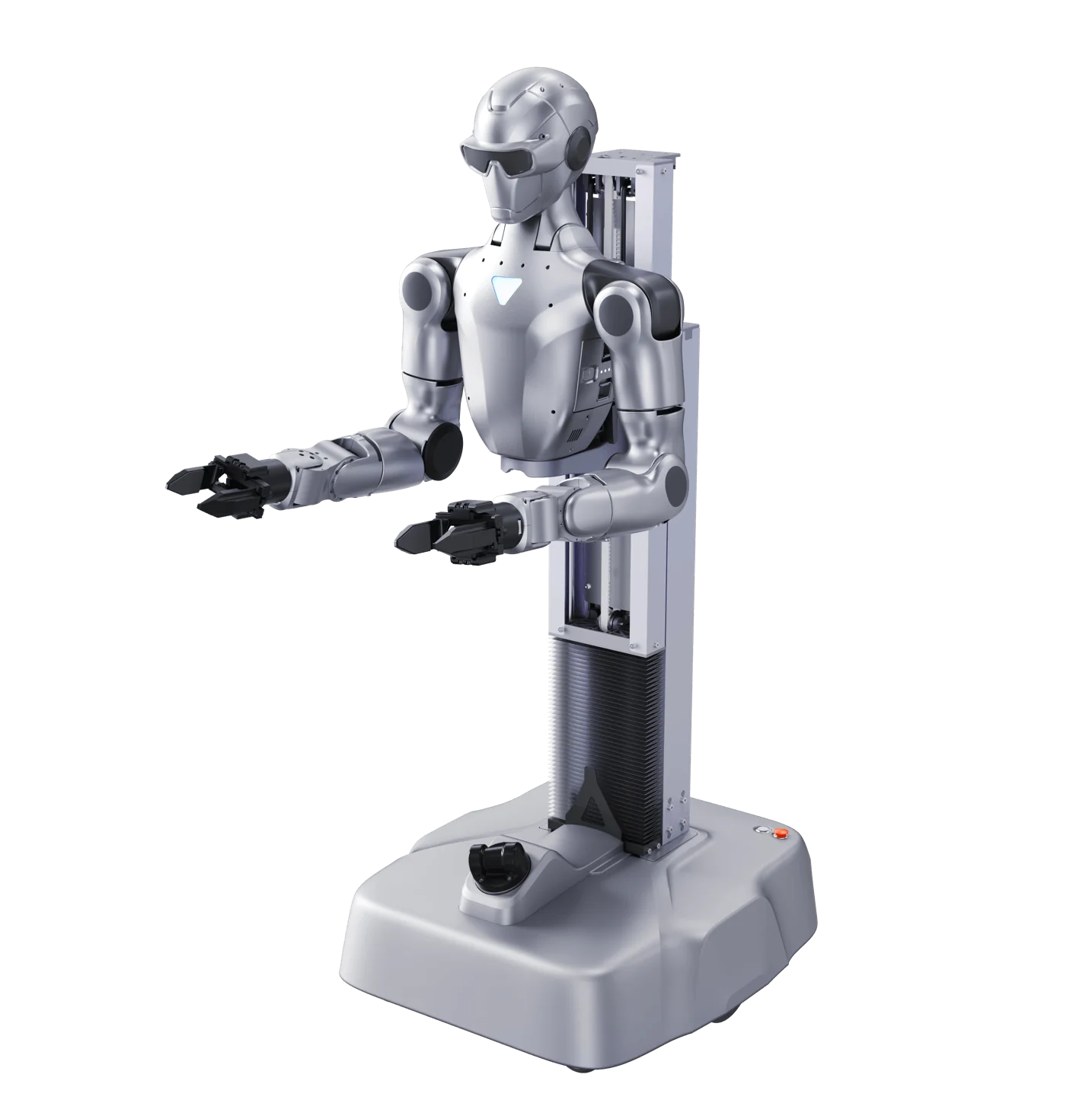
A humanoid robot PoC is not buying the robot and seeing what happens. It is an experiment with a defined scope, metrics written down in black and white, and a final decision: go ahead, change approach or stop.
What a PoC must demonstrate
A PoC answers a single question, framed so that it can be verified. Examples of well-framed questions:
- Does the robot pick boxes from a pallet and place them on the conveyor with an acceptable success rate?
- Does the robot collect teleoperation data that can be used to train a manipulation policy?
- Does the robot complete a visual inspection round of an area without operator intervention?
Questions like "let's see what it can do" or "let's do a demo" produce videos, not decisions. If the question is not clear, the first step is a process analysis, not a purchase.
The phases of a PoC, with indicative timelines
The sequence below is the one we describe on the Assessment and PoC page: the first four phases add up to an indicative 5–9 weeks for a single use case. The later phases depend on the scope and are fixed in the PoC plan.
| Phase | What you do | Output | Indicative duration |
|---|---|---|---|
| 1. Process mapping | Task, spaces, flows, safety constraints, current baseline | Task description and starting KPIs | 1–2 weeks |
| 2. Comparing solutions | Humanoid, cobot, AMR or no robot | A reasoned shortlist | ~1 week |
| 3. Simulation | 3D model of the workstation and the robot | Feasibility and critical points | 2–4 weeks |
| 4. PoC plan | Objectives, hardware, test scope, preliminary risk assessment | PoC plan and success criteria | 1–2 weeks |
| 5. Execution | Setup, testing in a cordoned-off area, data collection | KPI data | To be defined in the plan |
| 6. Decision | Comparing measured and expected KPIs | Go, no-go or revision | To be defined in the plan |
If the PoC requires a new robot, delivery time also has to be considered: for humanoids we indicate 4–6 weeks from signing (see the home page).
The KPIs to write down before you start
A KPI set after the tests always adapts to the result. That is why they must be written in the plan, with a threshold value. The most common:
- Success rate: tasks completed over tasks attempted, across a minimum number of trials.
- Cycle time: seconds per task, compared with the current figures.
- Human interventions: how many times per working hour the operator has to correct, reposition or stop the robot.
- Real battery life: actual working hours per battery, compared with the manufacturer's figure (about 2 hours for the G1, about 6 hours for the G1-D with mobile base, about 1 hour for the R1).
- Setup time: how long it takes to get the robot back into operation after a task change or a fall.
Example with hypothetical numbers: a success threshold of 90% over 200 picks, a maximum cycle time of 20 seconds, no more than 2 interventions per hour. If the PoC closes at 80% with 6 interventions per hour, the report must say why (grasping, perception, positioning) and whether there is a plausible fix.
Which humanoid to use for the PoC
| Task | Platform | End-user price (excl. VAT) |
|---|---|---|
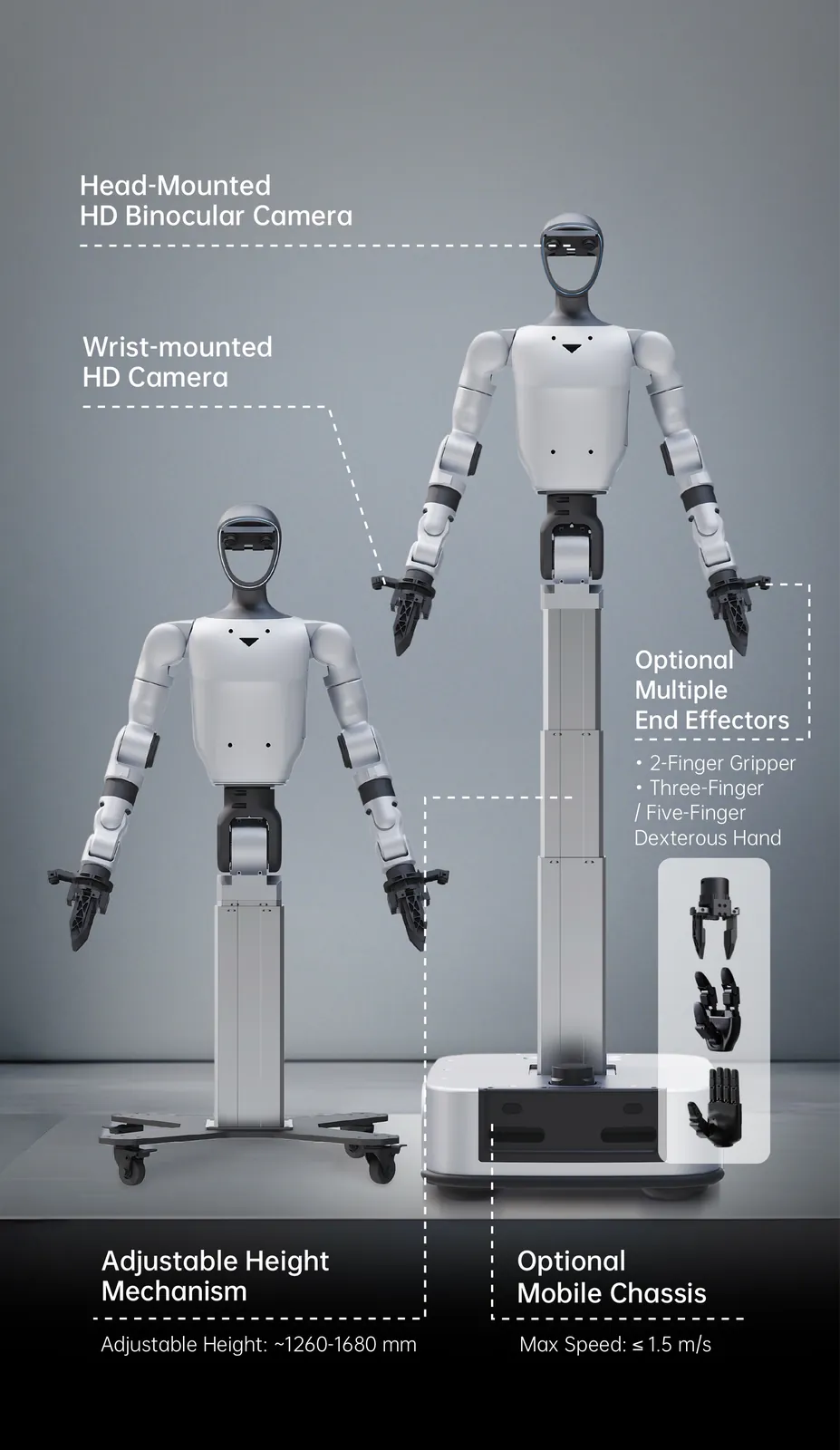
| Pick and place on a bench, teleoperation data collection | G1-D Standard (fixed stand) | from €38,005 |
| Manipulation across several stations | G1-D Flagship (mobile base) | from €51,944 |
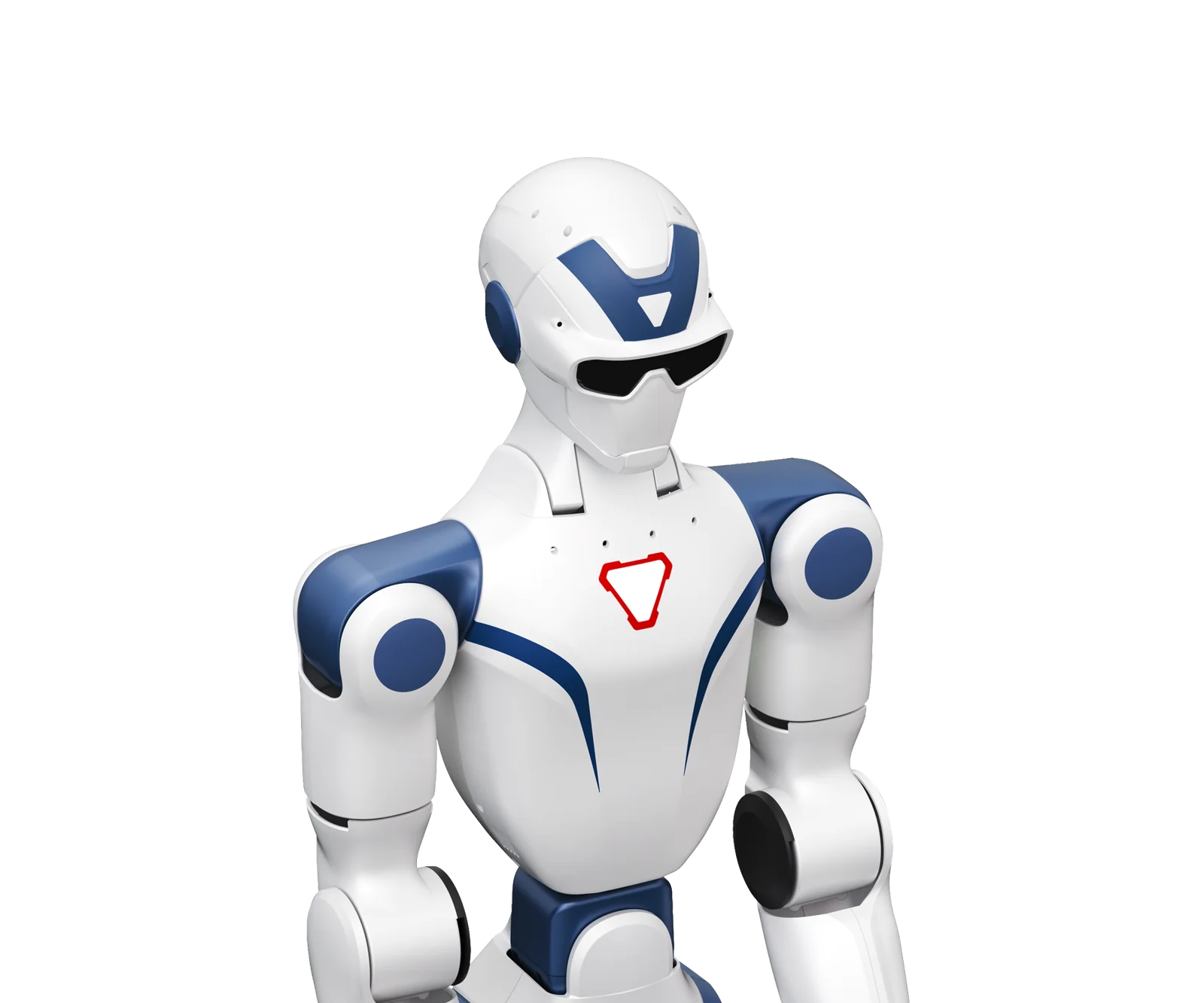
| Compact manipulation on a tight budget | R1-D | from €6,295 (R1-A5 Standard) |
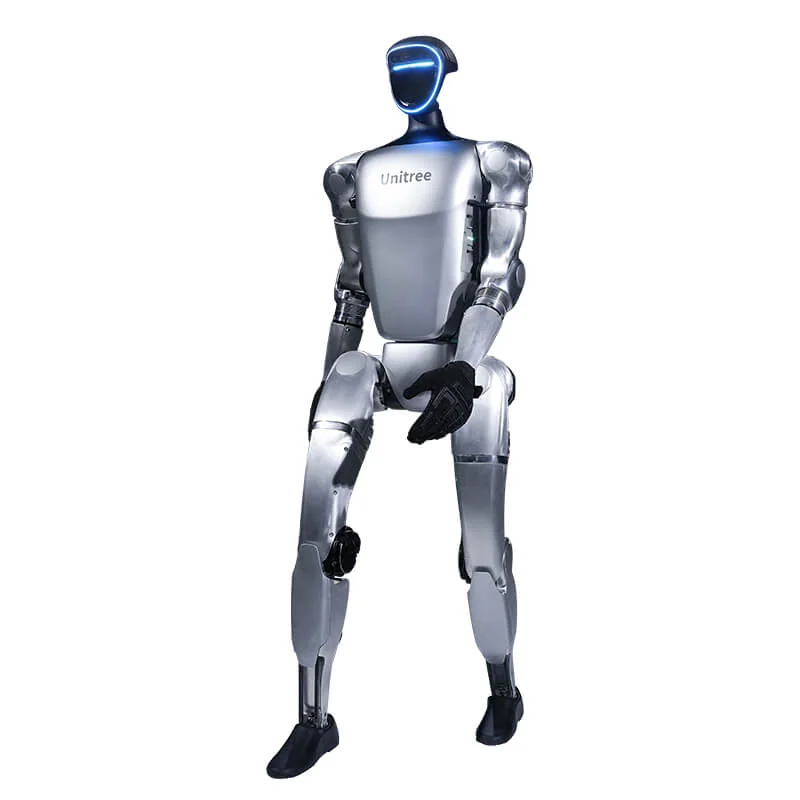
| Locomotion, software, embodied AI | G1 EDU | from €38,005 (G1-U1) |
| Teaching and low-cost trials | R1 EDU | from €14,930 (R1-U1) |
| Human-scale interaction | H2 | from €43,874 (H2 Air) |
For a PoC where the robot has to be programmed, you need the EDU versions: according to Unitree's G1 and R1 specifications, only these can be programmed with the SDK. If the task is manipulation only, a legless torso like the G1-D removes the risk of falling and simplifies the cell. Full comparison: which Unitree humanoid to choose.
Safety and rules to consider
General information, not legal advice.
Today machines placed on the EU market follow the Machinery Directive 2006/42/EC. From 20 January 2027 Regulation (EU) 2023/1230 applies, repealing the directive from that same date. For industrial robots the technical reference is the ISO 10218 series, revised in 2025. For dynamically stable mobile robots (legged or on balancing wheels) ISO is developing ISO 25785-1: as of October 2026 it is still a Committee Draft.
In practice, for the PoC:
- A cordoned-off test area, with controlled access during testing.
- A biped in an emergency stop can fall, because its stability depends on active control. For the first tests on a biped you need a support or a harness and clear space around it.
- A written preliminary risk assessment, shared with the company's health and safety officer.
- Operators trained on the emergency stop and on recovery procedures.
Further reading: Unitree robots and the Machinery Regulation 2027.
Buy, rent or simulate
A PoC does not always mean buying the robot straight away. In some cases a first check is done in simulation; in others you can consider renting or a short-term pilot. If buying is the chosen route, it is worth checking first whether the project can use UK reliefs such as capital allowances, R&D tax relief or regional adoption programmes for manufacturers: requirements and official sources are on the Financing page. We can provide the quote and technical documentation for your claim but do not give tax advice: the eligibility of the specific asset should be confirmed by your accountant.
What the final report must contain
- KPIs measured against the plan's thresholds, with the number of trials.
- Causes of failures, broken down by category (perception, grasping, navigation, software, hardware).
- Estimated total cost to move to the next phase: hardware, software, safety, training.
- Recommendation: go, no-go or revision of the scope.
A PoC that does not reach its KPIs is not wasted time: it is information that avoids a wrong order. If the numbers do not hold up, it is better to know before buying ten units.