The tax reliefs available for a robot depend on who is buying (company, sole trader or partnership, SME, university), how the robot is acquired (outright purchase, loan, leasing) and how the project is set up. Below are the schemes in force in October 2026, with their requirements and official sources.
General information, not tax or legal advice. The rules change often: before ordering, check the official pages (gov.uk, the HMRC Capital Allowances Manual, madesmarter.uk) and ask your accountant to confirm. The links to official sources in this article and in the Sources section point to the texts of the Italian scheme, which we cite for comparison.
Which schemes exist today
| Scheme | What it gives | Who can use it | Where to claim |
|---|---|---|---|
| Full expensing | 100% capital allowances on qualifying main-rate plant and machinery | Companies | In the company's tax return, with your accountant |
| 40% first-year allowance | 40% allowance on new and unused main-rate plant and machinery, from 1 January 2026 | Corporation Tax and Income Tax payers; mainly helps unincorporated businesses and assets bought for leasing | In your tax return, with your accountant |
| Annual Investment Allowance (AIA) | Full value of qualifying plant and machinery deducted from profits before tax, up to £1 million per accounting period | Sole traders, partnerships whose members are all individuals, limited companies | In the tax return for the period in which you bought the item |
| R&D tax relief (merged scheme and ERIS) | Merged R&D expenditure credit at 20% of qualifying expenditure, or enhanced support for R&D-intensive SMEs | Companies doing qualifying R&D; ERIS for loss-making R&D-intensive SMEs | Claim to HMRC with your adviser, who checks whether advance notification is needed |
Made Smarter Adoption, a programme for manufacturers in England, is not a tax relief and has its own section below, as does leasing, which is a way of acquiring the robot rather than an incentive. In Italy, where we ship from, a different instrument applies in 2026: an enhanced tax depreciation for companies based in Italy, which we mention for comparison.
Capital allowances: how they work
The rules are summarised on GOV.UK and, for the 40% allowance, in the HMRC Capital Allowances Manual (CA23195A). For comparison, Italy introduced an enhanced depreciation scheme in 2026, set out in article 1, paragraphs 427-436, of Italian Law No. 199 of 30 December 2025 (the Italian 2026 Budget Law), with implementing rules in an Italian interministerial decree of 7 May 2026 and a summary on the official page of the Italian Ministry of Enterprises (MIMIT). The key points for the UK:
- Full expensing: companies can claim 100% capital allowances on qualifying main-rate plant and machinery, such as a robot bought for the business.
- 40% first-year allowance: from 1 January 2026, a new permanent allowance for new and unused main-rate plant and machinery, available to Corporation Tax and Income Tax payers. It mainly helps unincorporated businesses and assets bought for leasing; the conditions are in the HMRC Capital Allowances Manual (CA23195A).
- Annual Investment Allowance: sole traders, partnerships whose members are all individuals and limited companies can deduct the full value of qualifying plant and machinery from their profits before tax, up to an AIA limit of £1 million per accounting period.
- Timing: you claim the AIA in the period in which you bought the item, and companies under common control share one allowance.
- Nature: capital allowances reduce taxable profits; they are not a cash grant. Which allowance fits depends on your business structure and the asset.
Robots made outside the EU
The descriptions of the UK schemes in this overview set no condition on where the equipment was made: what counts is the type of asset and how it is used. In Italy, the enhanced depreciation was first limited to goods made in the EU or EEA; article 7 of Italian Decree-Law No. 38 of 27 March 2026, converted by Law No. 88 of 22 May 2026, removed that condition with effect from 1 January 2026. For a Unitree robot, which is made in China, what matters is therefore whether it qualifies as plant and machinery and what you use it for. Confirm this with your accountant.
What it is worth: an example with hypothetical figures
A profitable company buys a robot for €50,000 (excluding VAT) for use in its business. If the robot qualifies as main-rate plant and machinery, full expensing lets the company claim 100% capital allowances on it, so the whole cost is deducted from taxable profits. A sole trader or a partnership of individuals would look at the AIA instead, within the £1 million limit. The tax saved depends on your tax rate, your profits over the years and the rules for the specific asset, so we do not put a figure on it: this example shows the mechanism, not an estimate for your business.
Claims and applications: what comes before the order
Some steps are best taken before you commit to the purchase. The Italian scheme, for comparison, runs its bookings and filings through the portal of the GSE, Italy's state energy services agency. In the UK, in order:
- Capital allowances: check with your accountant which allowance fits your business structure and the asset. The claim is made for the accounting period in which you buy the robot.
- R&D tax relief: if the robot is part of an R&D project, your adviser checks which project costs qualify and whether you must notify HMRC in advance of the claim.
- Made Smarter Adoption: if you are a manufacturer in England, contact the regional partner for the postcode of your main site and check what support is available before you order.
Conditions and amounts change: before each step, check the official page of the scheme.
Linking the robot to the project: what it means
This is the point that most often causes problems for anyone buying a robot to experiment with. Capital allowances concern plant and machinery used in the business; R&D tax relief concerns qualifying R&D work, for example on robot control, manipulation or embodied AI; Made Smarter Adoption supports technology adoption in manufacturing. A few practical pointers, always to be checked with your accountant or the programme:
- A cobot such as the Fairino FR3 (from €5,448 excl. VAT) installed in a cell and connected to the MES is a simple case to document as production equipment.
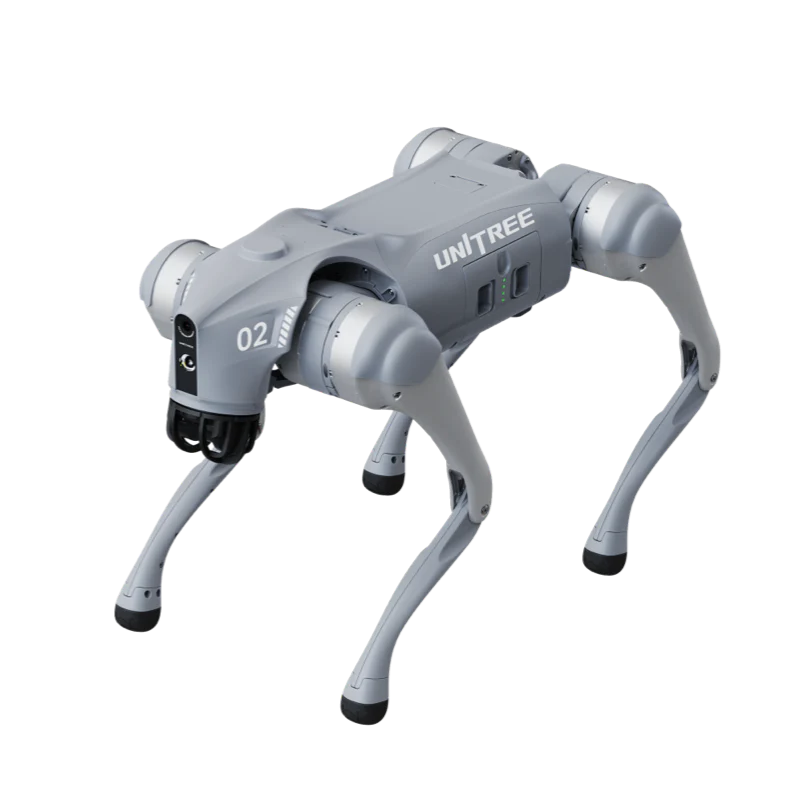
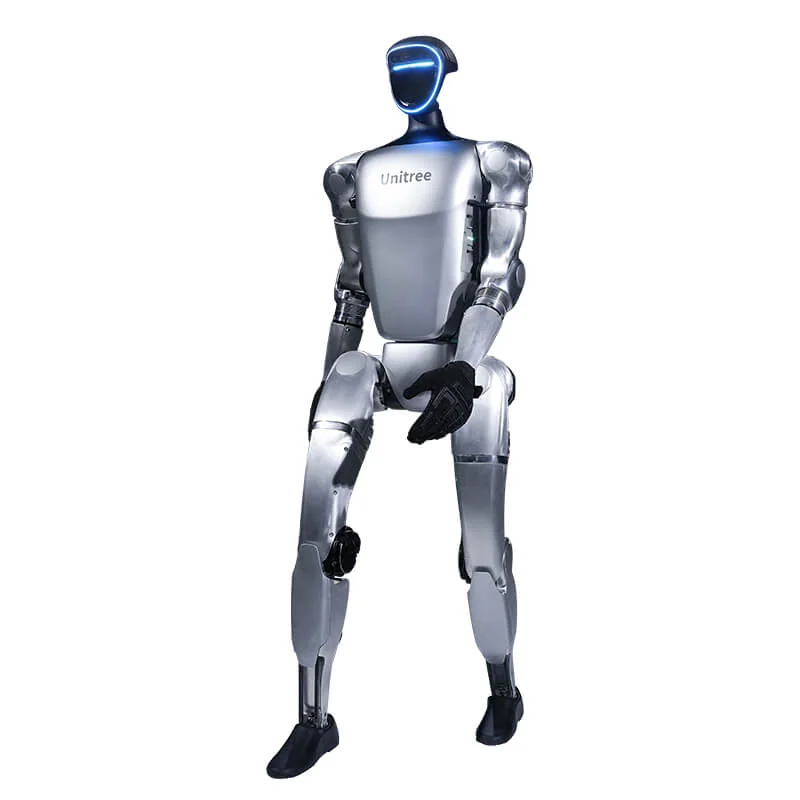
- For humanoids and quadrupeds the version matters: EDU versions (for example the Go2 EDU or the G1 U series) have an open SDK and allow you to develop data exchange and your own software; the base versions designed for use with the app are harder to integrate.
- A robot bought for demonstrations or trade fairs, with no role in a process or an R&D project, is hard to link to R&D tax relief or an adoption programme: ask your accountant how it is treated.
The available versions are listed on the Unitree G1 and Unitree Go2 pages.

R&D tax relief: merged scheme and ERIS
R&D tax relief is the scheme for companies that develop something new around the robot, rather than simply buying it. Italy, for comparison, has a different model for SMEs, a state contribution to the interest on an investment loan, described on the Italian Ministry of Enterprises page on its SME equipment scheme. The key points of the UK scheme, according to GOV.UK:
- it applies to accounting periods beginning on or after 1 April 2024, for companies doing qualifying R&D, for example on robot control, manipulation or embodied AI;
- companies claim under the merged R&D expenditure credit, at 20% of qualifying expenditure;
- loss-making R&D-intensive SMEs claim under enhanced R&D intensive support (ERIS) instead;
- your adviser checks which project costs qualify and whether you must notify HMRC in advance of the claim.
If you are also considering capital allowances, check with your accountant how the two schemes combine on the same project.
Made Smarter Adoption (England)
Made Smarter Adoption is a programme for small and medium-sized manufacturing and engineering businesses with manufacturing premises in England, delivered by regional partners according to the postcode of your main site. Support includes impartial technology advice, digital road-mapping and leadership training, and in several regions match-funded grants of up to £20,000 for hardware or software. A cobot or a palletising system may fit an adoption project, but support varies by region: check availability with your regional partner on madesmarter.uk. For comparison, in Italy the national workplace accident insurer runs a grant call for workplace safety projects that can include a cobot (INAIL notice for the 2025 Italian call). The rules change with each programme period: follow the official pages.
Leasing and rental
With finance leasing the business pays regular instalments instead of the full price up front. The 40% first-year allowance also covers assets bought for leasing, which concerns the leasing company that buys the robot; how your lease payments are treated is a question for your accountant. With operating rental the asset remains the property of the rental company: ask your accountant whether and how your business can benefit from tax reliefs in that case.
Universities and research centres
Capital allowances and R&D tax relief are aimed at businesses. Universities and public research bodies usually buy with project funds, regional calls or European programmes, each with its own rules on eligible costs (hardware, software, training). In that case the quote has to be built on the categories set by the call. More on this: Universities and Research.
Checklist before ordering
- Check what kind of buyer you are: a company (full expensing), a sole trader or partnership (AIA), or an SME manufacturer in England (Made Smarter).
- Link the robot to a documented business use, R&D project or adoption project, and choose a version that fits it.
- Before ordering, ask your adviser whether HMRC must be notified in advance of an R&D claim, and check availability with your Made Smarter regional partner.
- Separate hardware, software and services (training, integration) in the quote.
- Involve your accountant or tax adviser before signing the order.
What Abra Robotics does
Abra Robotics supplies Unitree robots, cobots and AMRs in the UK, Ireland and internationally, with support in English. For your claim or application we can provide the quote and technical documentation (specifications, configuration). Before the quote we run a free technical check: the robot version, how to document its role in your project and which items to separate in the offer. We are not tax advisers: confirming the relief is up to your accountant. More on our financing page, which covers the Italian schemes; to choose the robot, start with the assessment.
Frequently asked questions
Can a Unitree robot made in China qualify for UK capital allowances?
Yes, where it was made does not exclude it: full expensing, the 40% first-year allowance and the AIA set no condition on origin, and in Italy the EU or EEA production requirement was removed from 1 January 2026. The other requirements still apply, to be confirmed with your accountant.
Are capital allowances a cash grant?
No. They reduce taxable profit in the period you claim and are not paid out in cash: they only help a business that has tax to pay.
Does it apply to leasing too?
The 40% first-year allowance also covers assets bought for leasing, which concerns the leasing company that buys the robot. How your lease payments or an operating rental are treated is for your accountant to check.
Can a university use capital allowances to buy a G1?
In general no: these reliefs are aimed at businesses. Universities use project funds, regional calls or European programmes.
Do training and software count?
Made Smarter Adoption grants, where available, can cover software as well as hardware. The capital allowances described here do not mention training: keep it as a separate item in the quote.
Sources (Italian scheme, for comparison)
- MIMIT, Italian enhanced depreciation scheme, official page (updated 15 October 2026)
- MIMIT, Italian interministerial decree of 7 May 2026, implementing rules
- Normattiva, Italian Law No. 199 of 30 December 2025 (art. 1, paragraphs 427-436 and annexes IV and V)
- Normattiva, Italian Decree-Law No. 38 of 27 March 2026, art. 7
- GSE, Italian enhanced depreciation: confirmation filings open
- MIMIT, Capital goods: Italian scheme for SME investment
- INAIL, Italian ISI 2025 call: 600 million, grant up to 65%
- INAIL, Italian ISI 2025 call published